

The mountain climate is harsh and unpredictable. Without even mentioning the most hostile conditions found on certain mountains around the planet, the Alpine peaks can be capricious and never let themselves be easily tamed. To stay safe in the mountains, the watchwords are patience and humility. The weather changes quickly, and you can move from a dry, sunny climate to damp and foggy in no time at all.
It is essential to check the weather forecast before every mountain outing — even before a few ski runs on a controlled area. Marmots don’t eat humans lost in the fog, but it would be a shame to get lost in the mountains, especially in mid-winter when the thermometer can easily reach -20°C at night.
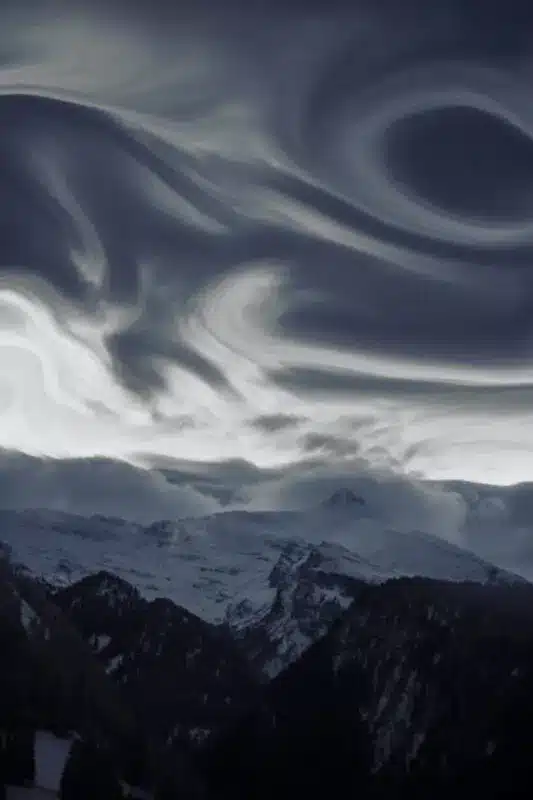
If the fog has rolled in faster than your skis, there are a few tricks to avoid ending up at the bottom of a valley or in a crevasse. For example, the piste-side stakes — known as markers — are good indicators. The colour of the boundary markers tells you the piste category and therefore its difficulty level (green, blue, red, black).
If they are wide alternating yellow and black bands, they signal a hazard.
To know whether you are still on the piste or off it, simply look at the top of the markers: those located on the right side of the piste in the direction of descent are fitted with a fluorescent orange device.
In low visibility, it is also important to ski slowly. With reduced visual cues, balance is more unstable and injuries can quickly occur!
Carrying a paper piste map is also necessary for your mountain safety, since when you do spot a piste signpost you can quickly work out where you are!
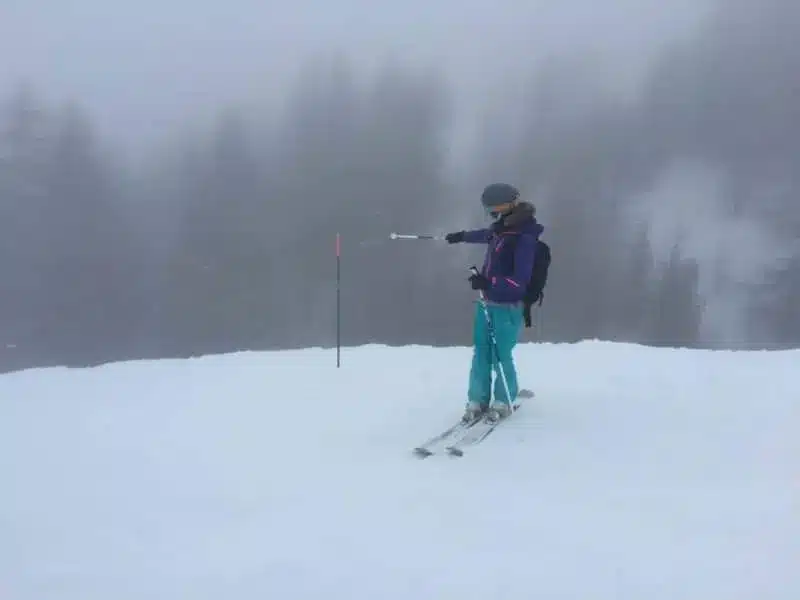
The mountain is, above all, common sense. It’s a living, unpredictable natural space, the result of the very activity of the earth. The mountain is movement: snow that slips, stones that roll, ground that dances… It’s beautiful but it can be dangerous!
The most important thing is to stay humble in the face of this dominant nature. It’s about listening to what it has to tell us, what mountain professionals advise, and listening to yourself.
If you don’t feel like a skier today, leave the planks behind — there are plenty of other things to do in the mountains!
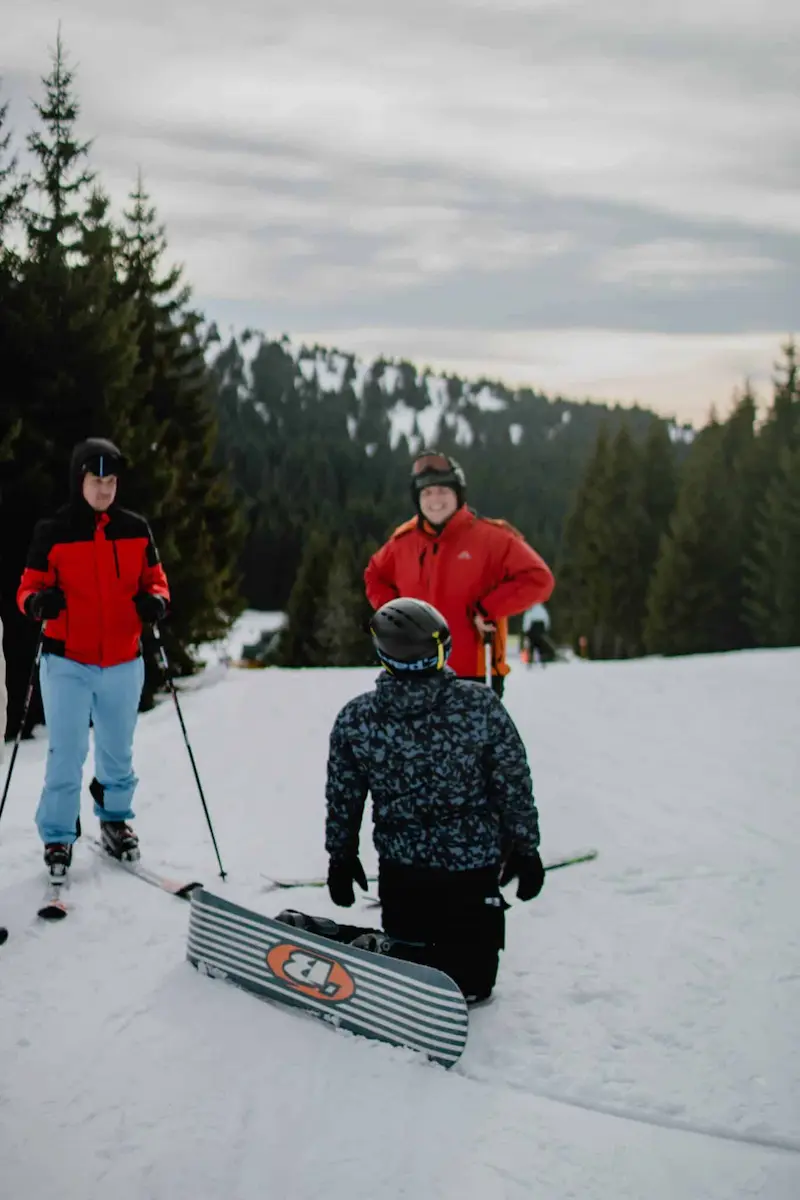
For sliders, the rules of mountain safety are simple: respect skiers and snowboarders below you (downhill), control your speed and trajectory, and slow down as you approach beginner zones and the lift queues at the bottom of the pistes. We don’t want a re-run of the chairlift queue scene from a French ski farce!
You should also avoid stopping just anywhere, such as behind a bump that offers no visibility — respect the signage and respect every user, especially those practising adaptive skiing whose manoeuvres are more delicate.
And of course, stay on the marked pistes and seek the advice and supervision of a professional if you wish to venture off-piste (without forgetting the proper safety gear). Don’t forget that every year avalanches happen off-piste and unfortunately sweep away both novices and experienced skiers.
Good to know — the European emergency number to reach mountain rescue is 112.
The number is easy to remember for your mountain safety, the call is free and it allows you to be geolocated.
That said, it does require having signal…
Just in case, also know that you can reach emergency services by SMS at 114. This number was designed primarily for deaf or hard-of-hearing people.
We recommend sharing these mountain safety tips with your loved ones to enjoy serene, restorative holidays in our beautiful mountains!
Be inspired by the memories of our guests and try our all-inclusive winter chalet holidays.